The Output Illusion: Measuring Real Learning vs. Fake Productivity
Maigie Team
Product Team
Have you ever spent six hours "studying" but couldn't explain the core concepts the next day? You highlighted every paragraph, color-coded your flashcards, and organized your desk perfectly. You felt incredibly productive. Yet, the actual knowledge didn't stick.
This phenomenon is known as the Productivity Illusion, and it's one of the biggest traps in modern education and professional development.
In a world obsessed with quantifiable output hours logged, pages read, flashcards flipped, we often confuse activity with accomplishment. Let's break down the critical differences between fake productivity and real, enduring learning, and how you can stop tricking yourself into wasting time.
What is Fake Productivity? 📉
Fake productivity is any activity that makes you feel like you are doing work without actually moving the needle on your comprehension. It's safe, it's comfortable, and it provides an immediate dopamine hit of "getting things done."
Common Traps of Fake Productivity:
- Passive Re-reading: Skimming the textbook for the third time and nodding along because the words look familiar. (Familiarity is not mastery).
- Excessive Highlighting: Coloring an entire page yellow. If everything is important, nothing is.
- Over-Organization: Spending 45 minutes optimizing your Notion workspace or planning your study schedule instead of actually studying the material.
- Copying Notes: Transcribing lectures or textbooks word-for-word without processing or summarizing the information in your own words.
Why we do it: Fake productivity rarely requires deep cognitive strain. It feels good because you are "busy," but your brain is actually on autopilot.
What is Real Learning? 📈
Real learning is uncomfortable. It requires cognitive effort, struggle, and moments of frustration. It is the process of building new neural pathways, connecting abstract concepts, and being able to retrieve information without a prompt.
The Pillars of Real Learning:
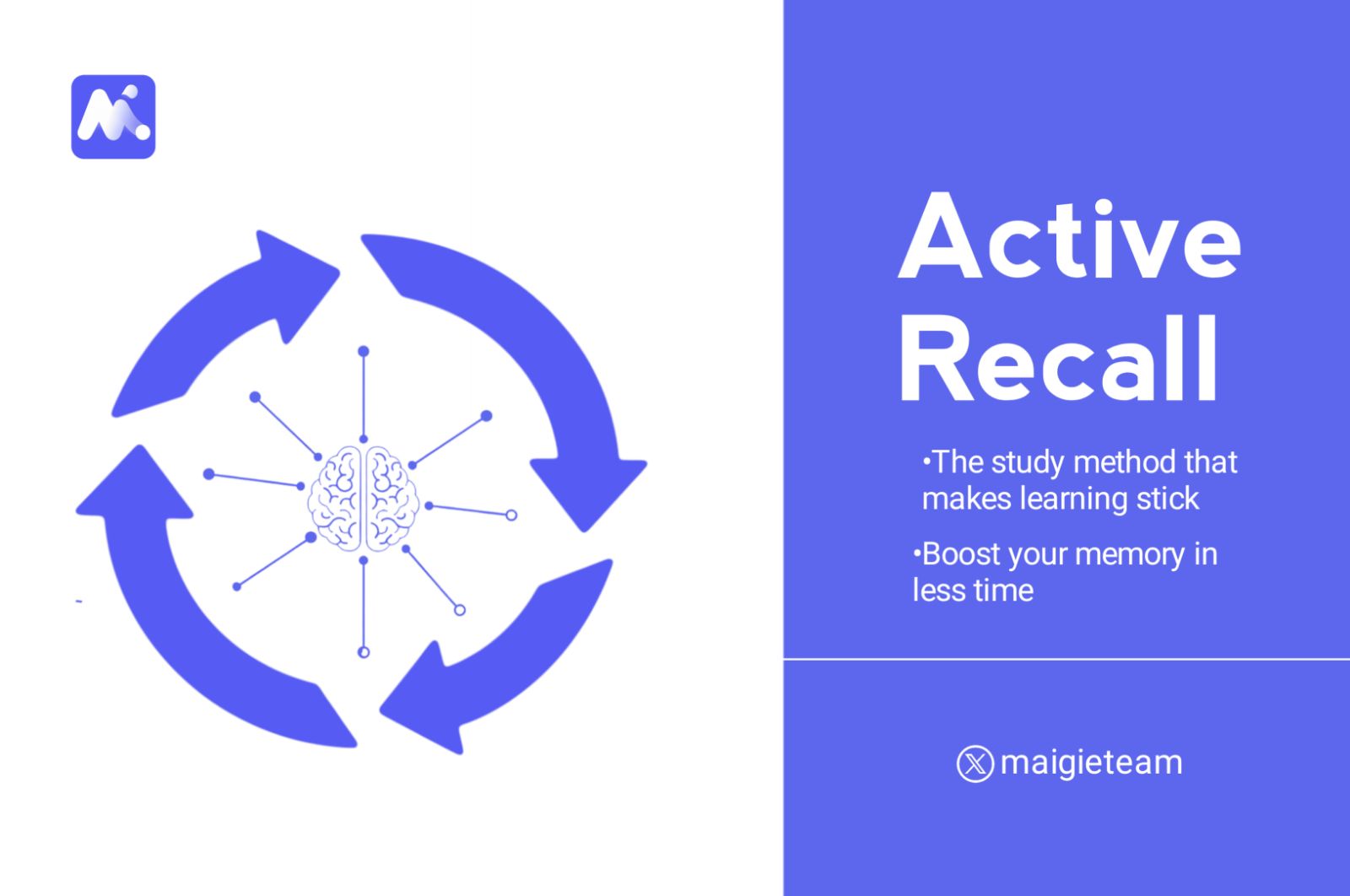
- Active Recall: Closing the book and forcing your brain to retrieve the information from scratch. This is the single most effective study technique.
- Spaced Repetition: Reviewing material at strategically increasing intervals to interrupt the "Forgetting Curve."
- The Feynman Technique: Explaining a complex concept in incredibly simple terms, as if teaching it to a sixth-grader. If you stumble, you've found a gap in your knowledge.
- Desirable Difficulty: Choosing study methods that are slightly harder than you're comfortable with (like practice testing over re-reading).
Measuring the Difference: How to Track What Matters
If measuring hours and pages is a trap, how do we measure real learning?
1. Shift from Input Metrics to Output Metrics 📊
- Input Metric (Fake): "I studied chemistry for 3 hours today."
- Output Metric (Real): "I successfully solved 15 complex chemistry equations without looking at my notes."
2. The Blank Page Test 📝
At the end of a study session, take a blank piece of paper and write down everything you remember about the topic without checking your resources. Connect the ideas with lines and arrows to form a mind map. The result on that paper is your actual learning yield.
3. Track Recall Quality, Not Quantity ⏱️
Instead of aiming to review 100 flashcards a day, track your "Ease of Recall." If you recalled 50 cards but struggled deeply with 20 of them, your next session should focus solely on the difficult 20, rather than blazing through another 100.
Striking the Balance ⚖️
Organization and planning (the hallmarks of "fake" productivity) aren't inherently bad. You need a clean workspace and a solid schedule to focus. The problem arises when the preparation replaces the work.
The 80/20 Rule for Learning: Spend 20% of your time on setup and organization (planning, organizing notes, gathering resources) and 80% of your time on high-friction cognitive tasks (active recall, practice tests, teaching concepts).
Final Thoughts 💡
The next time you sit down to learn something new, ask yourself: Am I choosing this study method because it's effective, or because it's easy?
Real learning is supposed to feel a little bit like a workout. If you aren't sweating cognitively, you're probably just organizing the dumbbells. Embrace the struggle, ditch the highlighter, and start measuring the recall that matters.
Stop Faking Productivity with Maigie 🚀
If you're tired of wasting time on study methods that don't work, let AI do the heavy lifting of organization so you can focus on real learning.
Maigie is an AI‑powered academic operating system that automatically schedules your spaced repetition and tracks your cognitive performance so you never fall back into the Productivity Illusion.
Ready to make your study time actually count? Sign up on Maigie today and experience the difference.